
Panagiotis and the Laterna
Cartes Postales from GreeceThis thread follows Panagiotis’s lifelong devotion to his hand-cranked piano, from childhood inspiration to a costly reckoning with the earnings he hid.
increasing Bearing strength in each event
 decreasing
Bearing strength in each eventdecreasingA Boy Finds a Calling

A Boy Finds a Calling
A film crew leaves an instrument
Ten-year-old Panagiotis and his friends encounter a laterna left behind during a film shoot. He turns its handle and hears music fill the street.
A vocation forms
The director returns and films the children’s delight. Seeing himself on screen the following year, Panagiotis decides he wants to become a laterna player.
The accidental encounter gives him an artistic identity that will shape his working life.
A Dream Funded by Family

A Dream Funded by Family
Saving for an instrument
Panagiotis’s parents set aside what they can to buy the expensive laterna. His father had hoped he would work in the foundry, but respects the boy’s determination.
The road opens
At seventeen, Panagiotis sets out in a tailored suit, imagining a life that will bring music and smiles to different cities. He sees himself as an artist, not merely a street worker.
The family’s sacrifice makes his chosen life possible, even as it means accepting uncertainty and travel.
A City Audience
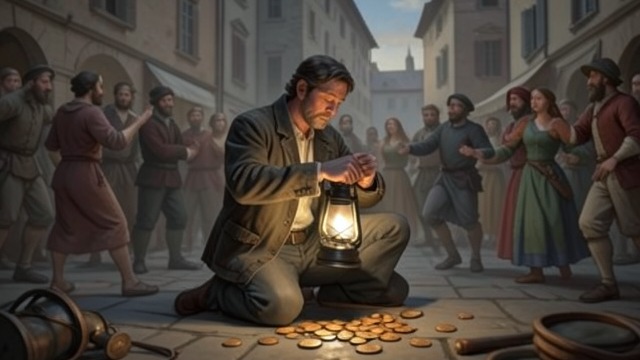
A City Audience
Music in the streets
Panagiotis becomes a familiar figure in Thessaloniki, playing in squares and along the esplanade. People dance, remember earlier times, and leave money in his tambourine.
The artist’s self-image
Although some see him as a beggar, he regards himself as a performer whose instrument offers a glimpse of the past. His modest lifestyle is sustained by the coins he earns.
Public affection gives him recognition, but his private understanding of his work remains central.
Coins Fill the Home
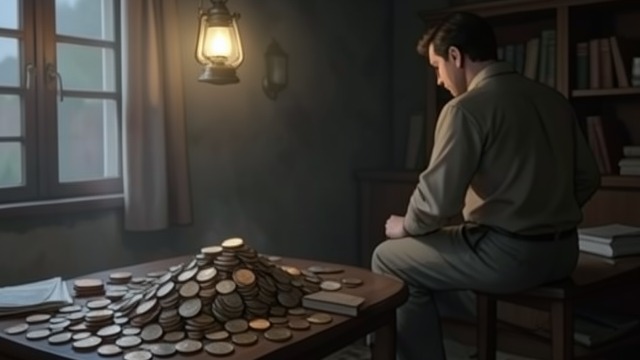
Coins Fill the Home
A hidden accumulation
Panagiotis stores the earnings from years of playing in his home, spending very little. Coins gather until they cover the floor and become impossible to ignore.
The meaning of poverty shifts
He has treated the hoard as proof that he can remain independent without changing his simple life. To the authorities, however, decades of undeclared income constitute tax evasion.
His chosen ideal of modest artistic freedom collides with obligations he has never accepted.
The Laterna Remains
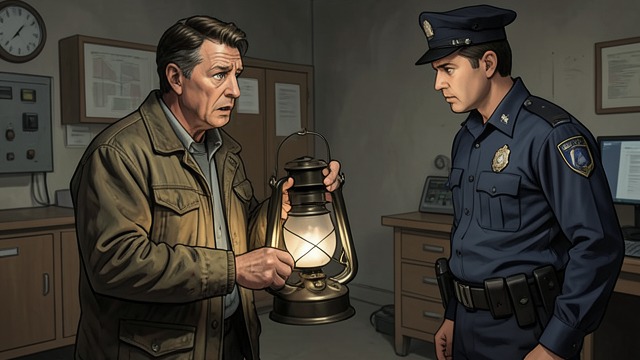
The Laterna Remains
A costly legal reckoning
Police seize Panagiotis’s coins, and court costs, taxes, and fines consume the fortune. He is left with the instrument that made the money possible.
A final inheritance
Panagiotis says that the laterna is all he needs. Before his death, he leaves it to his friend Tassos, who inherits the object but not the former player’s vocation or ability to evoke the past.
The instrument survives its owner, while its meaning changes in the hands of someone who cannot inhabit his artistic identity.
Summer 1954, in Athens
Three years after the film’s release
After Panagiotis settles in Thessaloniki
Decades after his street career begins
After the court case and shortly before Panagiotis’s death
